
Red Light Therapy Before or After a Workout?
Both can fit a routine, but they are not equally studied. If performance and muscle recovery are the goal, much of the exercise research has applied photobiomodulation before training.
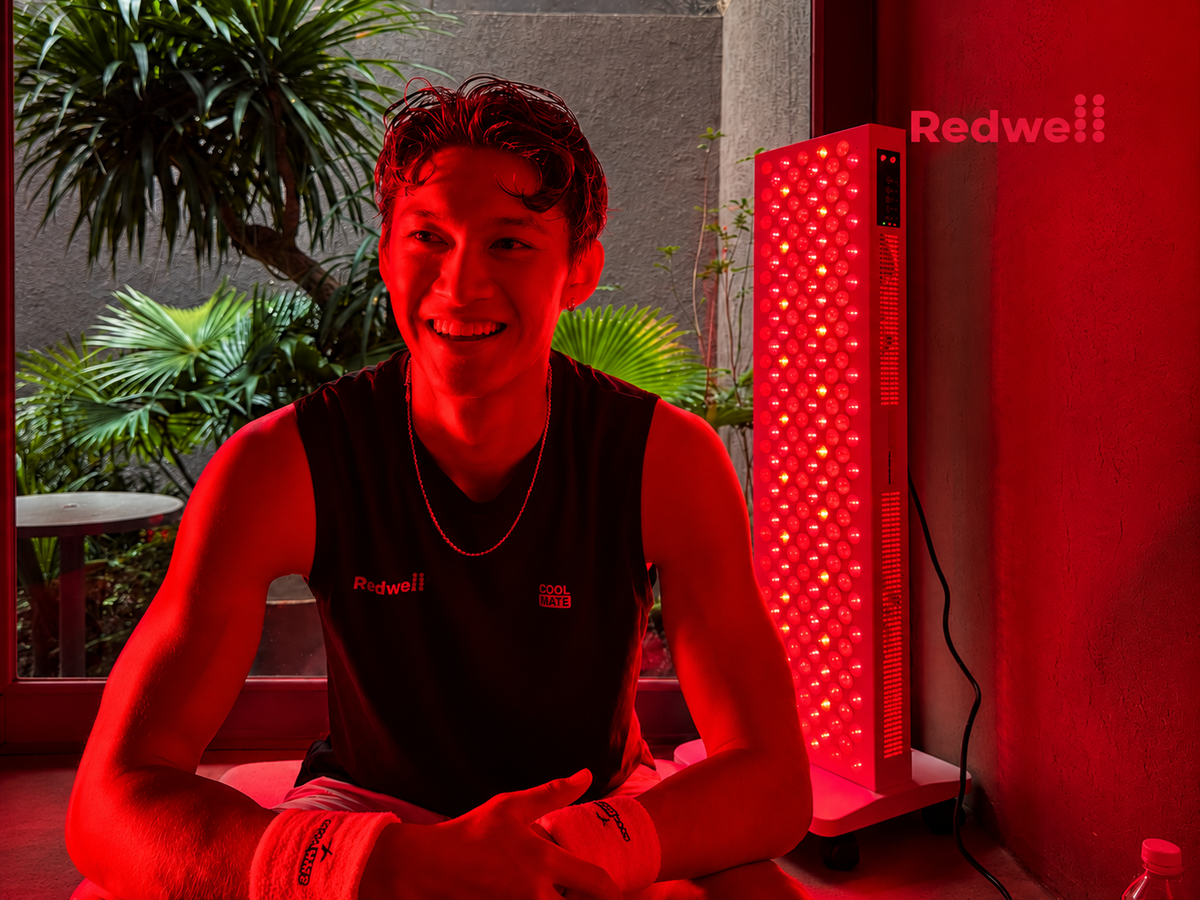
If you want the research-led answer, before training currently has the stronger case.
Studies of localized photobiomodulation have frequently used red or near-infrared light before exercise, with some reviews reporting benefits for muscle soreness or recovery measures. That does not create one universal protocol, and evidence varies with wavelength, dose, muscle group and training type.
After training is still a practical time for many people because it is easy to attach to an existing recovery routine. The right choice is the one that matches your goal and can be repeated consistently.
If recovery is still something you only think about after a hard session, start withWhy Recovery Deserves a Place in Your Weekly Plan.
Two useful moments. Different reasons.
Before training
The more studied timing in exercise PBM. Keep the session controlled and follow the device protocol rather than adding extra time.
After training
A convenient place to attach red light to cooldown, food, hydration and the rest of your recovery routine. Evidence is less consistent than for pre-exercise use.
What matters more
Wavelength, irradiance, distance, exposure time and consistency matter more than treating the clock as the only variable.
What the exercise research actually studies
Photobiomodulation studies do not simply ask whether someone used red light before or after a workout. They specify wavelength, energy, timing, muscle group and the exercise being performed.
That detail matters because a result from one protocol cannot automatically be transferred to every panel or every sport.
Why pre-exercise use gets more attention
Several reviews of localized PBM have found the pre-exercise approach promising for muscle performance or post-exercise recovery measures. A 2025 meta-analysis also reported lower soreness and better muscle performance at 24 hours when PBM was applied before exercise-induced muscle damage.
That is useful context, not a guarantee. Study protocols remain varied and whole-body evidence is still limited.
Where Redwell fits
Redwell is designed around practical, repeatable sessions. Our core reference wavelengths are 660, 810, 830 and 850 nm, within red and near-infrared ranges used repeatedly in PBM research.
We prefer clear guidance around distance and time over a wavelength-count race. The aim is to deliver a consistent session that fits around training rather than forcing training to fit around the light.
The simple rule
If you are experimenting with timing, keep everything else as consistent as possible. Use the same device, distance and session duration, then notice which placement in your routine is easiest to maintain.
For many people, that means before training when they want to follow the more studied exercise timing, or after training when habit and convenience are the priority.
For the wavelength side of the conversation, readRed vs Near-Infrared Light: What's the Difference?.
Common questions
Is red light better before or after a workout?
Research on exercise PBM has more often studied pre-exercise use, so that timing currently has a stronger evidence base. After training can still be a practical routine choice.
Can I use red light on rest days?
Yes, if it fits the guidance for your device and routine. A rest day does not require you to avoid red light, but more sessions are not automatically better.
Do I need a full-body panel for workout recovery?
No. Coverage is a format decision, not proof of effectiveness. Targeted and smaller panels can make sense when the goal and area are specific.