
Can Red Light Therapy Help You Wind Down?
Red light fits naturally into the part of the evening where the pace comes down. It creates a calm, screen-free ritual, and emerging PBM research is also showing promise for sleep quality.
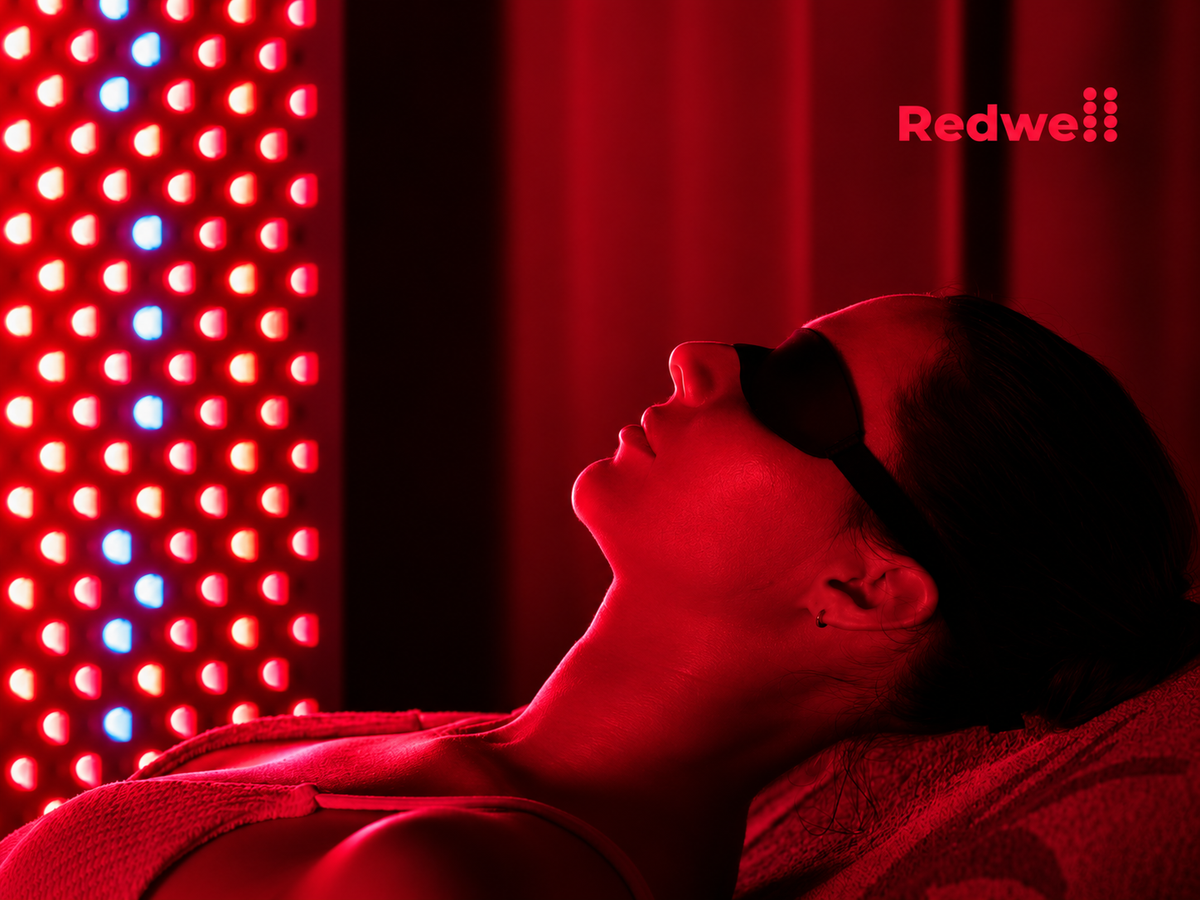
Yes. Red light can be a strong part of an evening wind-down routine.
A Redwell session gives the day a clear transition point: less screen time, less movement, a quieter environment and a repeatable moment to slow down.
There is also a growing research story behind it. A 2026 systematic review and meta-analysis of randomized trials found a modest improvement in subjective sleep quality with photobiomodulation compared with sham treatment.
For us, that makes the evening one of the most natural places for red light to live.
A calmer evening still starts with the basics. SeeWhy Recovery Deserves a Place in Your Weekly Plan.
A simple routine that gives the evening a clear ending.
Dim the inputs
Reduce bright screens and unnecessary stimulation so the session becomes a genuine change of pace.
Use the session as a cue
Use Redwell at a similar point each evening so the session becomes familiar and easy to repeat.
Keep the basics intact
Sleep timing, caffeine, alcohol, stress and room conditions still shape the night. Red light works best inside a strong evening routine.
Do not chase a sensation
You do not need a dramatic sensation. The strength of the routine is its consistency, not how intense it feels.
Why red light fits the evening so well
Red light therapy asks very little from the user. You set the panel, start the timer and stay still for the session.
That makes it unusually easy to pair with the part of the day when you are already trying to reduce stimulation. Instead of adding another active task, the session can replace ten or twenty minutes of scrolling, rushing or doing one more thing.
That is valuable even before we talk about sleep research.
What the sleep research is starting to show
Photobiomodulation and sleep is a developing research area, but the signal is encouraging. A 2026 systematic review and meta-analysis pooled five randomized controlled trials involving 240 participants and found a modest improvement in Pittsburgh Sleep Quality Index scores compared with sham treatment.
That does not turn red light into a sleeping pill. It does give the evening-use story a credible scientific foundation that is worth following.
The Redwell evening routine
Keep it simple. Use Redwell after your final training session, after a shower or before you settle into the quieter part of the evening.
Follow the recommended distance and time for your device, put the phone away and let the session become the bridge between the active part of the day and the rest of the night.
A good routine should feel easier after a week, not more complicated.
Build the ritual, then let it become normal
The strongest wellness habits are the ones that stop feeling like a project. Put Redwell in the same place, use it at roughly the same point in the evening and keep the setup ready.
That consistency is what turns a device into a ritual and a ritual into part of the way you end the day.
If you are new to the routine itself, start withYour First Red Light Session: What to Expect.
Common questions
Can red light therapy make you sleepy?
It can. Red light is easy to build into a calm evening routine, and recent randomized-trial evidence has reported modest improvements in subjective sleep quality with PBM. The most useful way to think about it is as one strong part of the whole evening setup.
Is red light better than bright white or blue light at night?
They are different questions. Bright blue-enriched light at night can increase alertness and affect melatonin timing. A Redwell session is a controlled PBM exposure, not ordinary room lighting, and it fits best alongside sensible evening light habits.
How late can I use red light?
There is no single bedtime cutoff. Use the device according to its guidance and choose a time that helps the session become part of your normal wind-down rather than pushing the rest of the evening later.